
What Is Pump Cavitation and How to Avoid It
What Types of Motor Faults Can MCSA Detect?
Gearbox Vibration Analysis: How To Find Gear Faults Through Vibration Signals

Construction Vibration And Noise Monitoring UAE
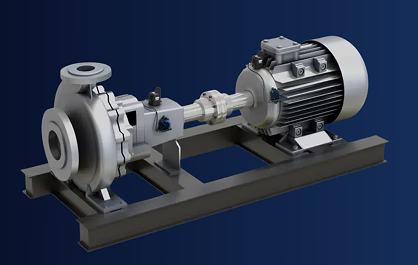
Why Pump Alignment Is Critical for Reliable Industrial Operations ?
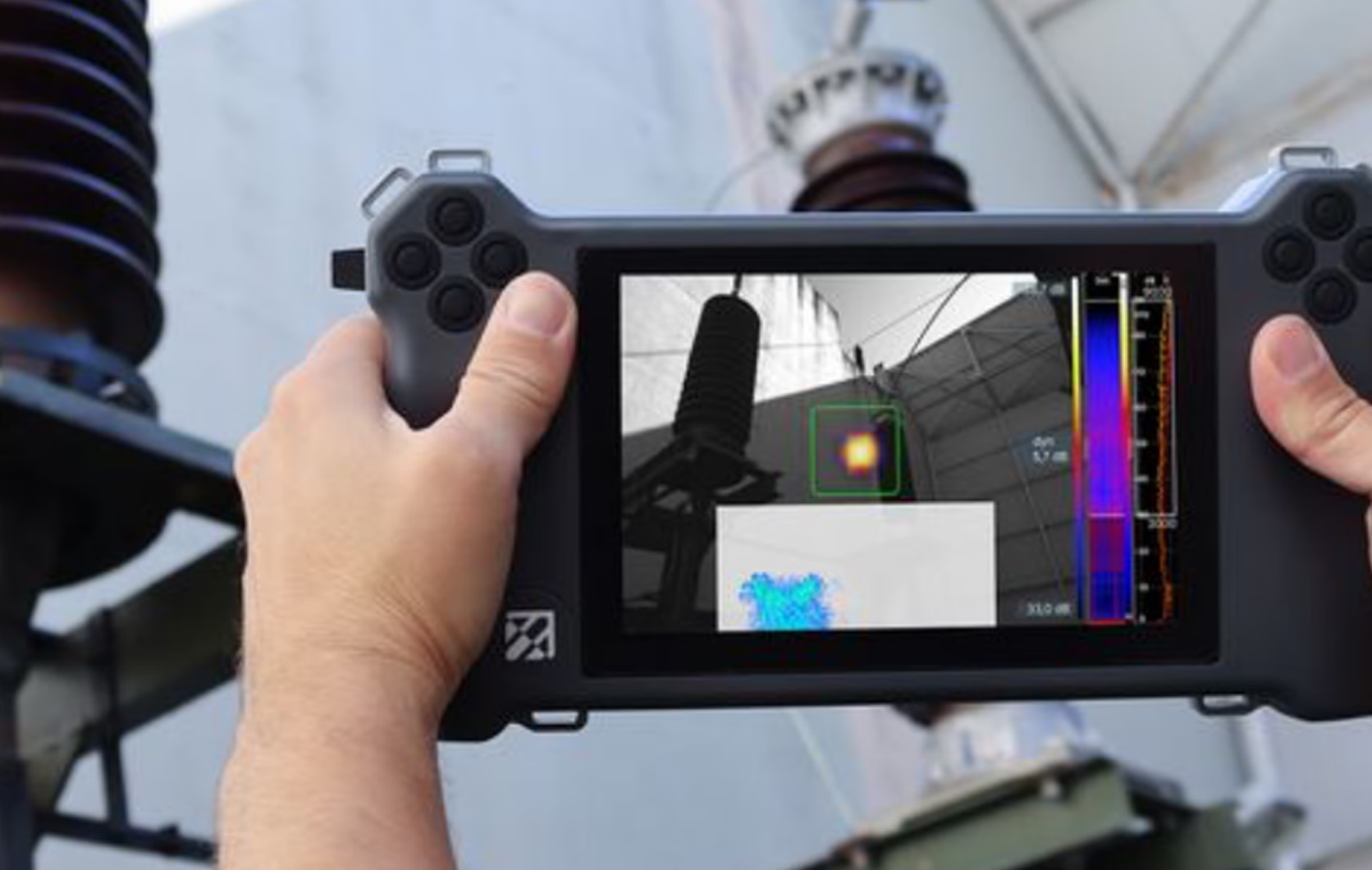
How Does an Acoustic Camera Work?
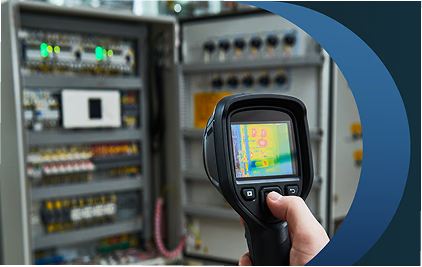
What is Infrared Thermography for Electrical Inspection?
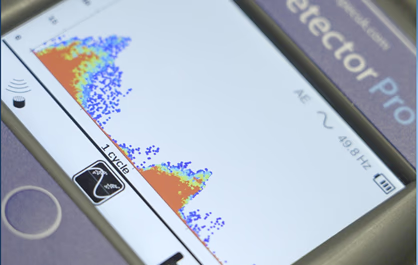
What is Partial Discharge Testing?
How FEA Analysis Improves Structural Performance & Reliability?
What is Dynamic Balancing: Why It Matters in Industrial Equipment
How Acoustic Emission Testing (AET) Detects Material Defects
Cavitation is caused when the pressure of a liquid inside a pump goes below its vapour pressure and small vapour bubbles form. These small gas bubbles entrained in fluid move into areas of higher pressure and they rapidly collapse and implode inside the pump, creating sudden shock waves that may result in excessive noise and vibration causing damage to internal components of the pumps. One of the most common indications of cavitation is unusual noise and vibration. The collapsing bubbles can create a sound similar to gravel moving inside the pump and if it persists the excessive vibrations can lead to mechanical stress and even a premature component failure.
What is Pump Cavitation?
Cavitation is more likely in systems where the Net Positive Suction Head (NPSH) is low or when the pumped liquid has a high vapour pressure. Fluids such as LPG, ammonia (NH₃), refrigerants, condensates, acetone, and gasoline must need careful attention to their suction conditions. Some high-viscosity fluid types are also susceptible when the system is not properly designed or operated for that application.
What Causes a Pump to Cavitate?
Pump cavitation happens when the pressure at the pump inlet becomes too low, which lets the vapour bubbles form in the liquid. Many operating and system-related factors can lead to this problem:

Low Suction Pressure
When the available NPSH is not enough or adequate for the pump’s proper operations, the liquid can begin to vaporise near the pump inlet.
Pump Selection and Design:
A pump design that is not suitable or incorrect pump selection can increase the risk of cavitation, especially when the pump operates outside its recommended conditions.
Changes in Fluid Viscosity:
differences in the thickness or viscosity of the pumped liquid can affect flow conditions and add to suction losses, making cavitation more likely to occur in certain situations.
Suction Piping Problems:
Long suction lines, multiple bends, narrow pipes, or other restricting factors can create additional pressure losses before the liquid reaches the pump.
Operating at Excessive Flow:
Running the pump at a flow rate higher than its intended operating range can increase suction losses and reduce the pressure available at the inlet.
High Fluid Temperature:
Hot liquids have higher vapour pressure, meaning they can vaporize more easily when the pressure drops inside the pump.
Identifying these conditions early can help operators correct the suction system, improve pump operation, and reduce the risk of cavitation-related damage.
Types of Cavitation in Centrifugal Pumps
Centrifugal pump cavitation is usually seen in two main types, one Suction cavitation and the other discharge cavitation. Both of which happen when the pressure and flow conditions inside the pump are not desirable, leading to the vapor bubbles formation that can damage the impeller and reduce pump performance as well as its efficiency.
- 1.
Suction Cavitation
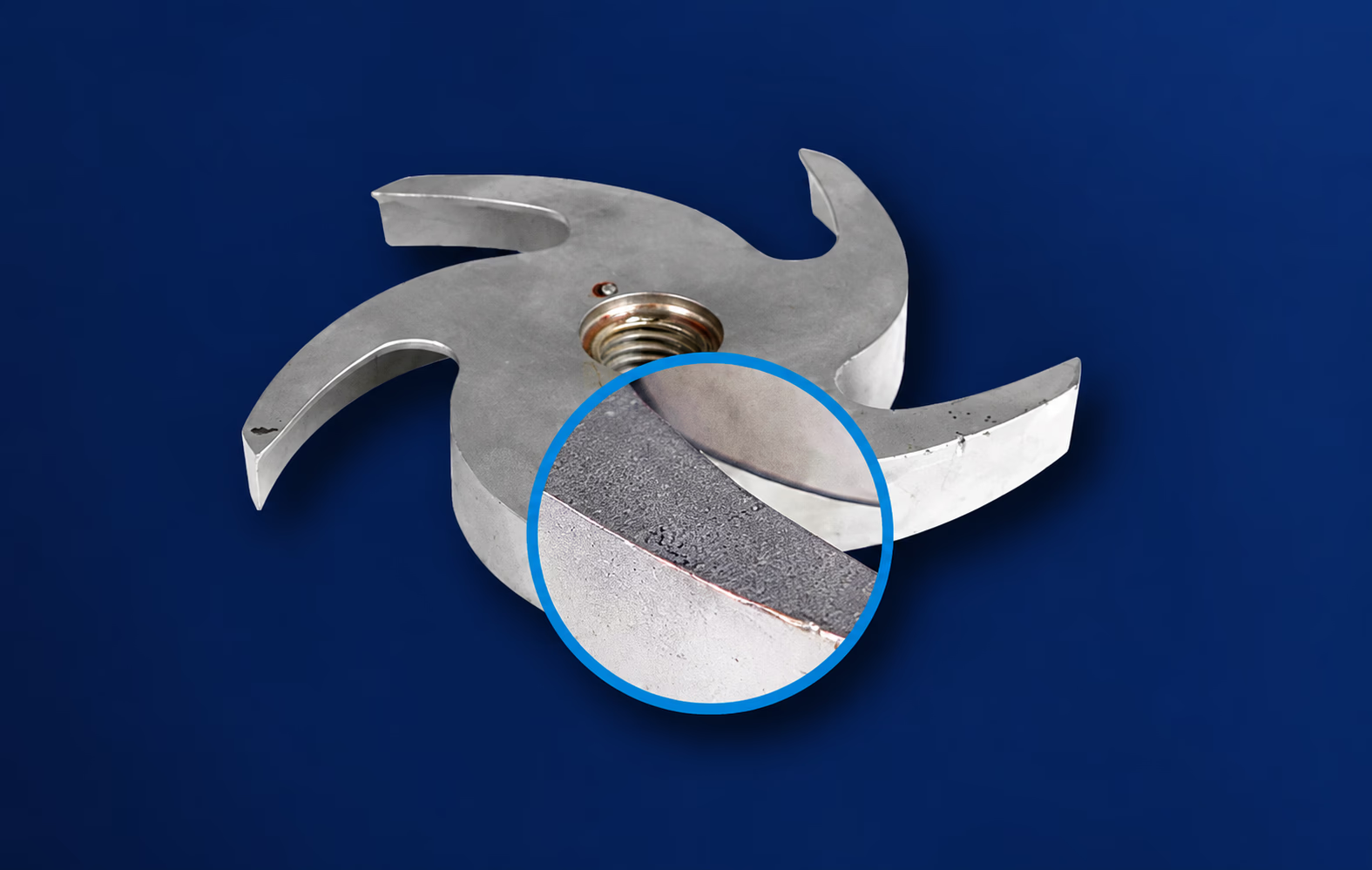
Suction cavitation arises when the pressure at the pump inlet becomes too low, creating excessive vacuum conditions. As vapor bubbles form and collapse near the impeller, they can cause repeated surface damage. Over time, this damage may look like multiple small pits on the impeller surface, giving it a rough and sponge-like appearance. Common causes of suction cavitation include:
- Operating the pump too far to the right side of its performance curve
- Any clog or restriction in the suction line
- Poor suction conditions at the pump inlet
- Excessively high inlet fluid velocity
- Poor pipe design or undersized suction piping
- 2.
Discharge Cavitation
Discharge cavitation happens when the pump works against excessive discharge pressure or when the flow leaving the pump is severely hindered. Under these conditions, the liquid cannot properly move away from the impeller as intended. This can create unstable flow and localized low-pressure areas, which creates vapor bubbles to form inside the pump.
Discharge cavitation can often be identified by checking the impeller for signs of surface damage, particularly if you notice pitting around the outer edges of the impeller. If left unaddressed, this condition can lead to increased vibration, noise, reduced efficiency, and premature pump failure. Understanding the differences between suction and discharge cavitation helps operators identify the underlying problem and take corrective action before significant damage occurs.
What's the Difference Between Suction, Discharge, and Cavitation?
Before digging deep into pump cavitation, it is important to first distinguish between the suction side and the discharge side of a pump. Basically, suction and discharge are the direction in which the fluid moves through the pump, and cavitation is an abnormal condition that can damage the pump.
Suction: This is the inlet side of the pump, where the fluid enters with lower pressure.
Discharge: This is the outlet side, where the pump takes the fluid into the system at a higher pressure.
Cavitation: When the pressure of the fluid drops below its vapor pressure, small vapor bubbles form and later collapse as the pressure increases, damaging pump components from within.
Suction cavitation is a very common form because the pressure at the pump inlet can easily fall below the required level. But, discharge cavitation can also develop, particularly when a pump operates at very low flow or away from its Best Efficiency Point (BEP). Under these situations, fluid could recirculate near the impeller, creating localized low-pressure areas where vapor bubbles can develop and implode.
Both suction and discharge cavitation generate similar warning signs, for example unusual noise, increased vibration, reduced pump performance, and surface erosion.But, the cause and corrective actions can be different depending on where the cavitation develops and they need different strategies to avoid these issues. So, the terms suction and discharge shows how a pump moves fluid, and cavitation gives the idea of the things that could go wrong inside a pump.
Early Signs of Pump Cavitation
Unusual noise from the pump is the first sign to look for when you are looking for cavitation signs. The noise most of the time resembles the sound of gravel rattling in the pump housing or pipes. But this sound could be missed in a noisy environment, especially in factories where heavy machineries are being operated. Following are the other early warning signs:
Intense and unusual vibrations: look for unusual vibration signatures that could reveal cavitation; proper vibration monitoring could identify this.
Dynamic Pressure levels: erratic pressure changes and gauge readings particularly on the suction side may indicate cavitation.
Poor Pump performance: Reduced flow rates and pump performance is another sign of underlying cavitation or internal damage issue that is affecting the fluid flow.
Cavitation and Outgassing – What Is the Difference?
Cavitation is mainly related to vapor bubbles formed due to low pressure and there is another term called outgassing or degassing, which occurs when dissolved air escapes from the liquid and forms bubbles. Like cavitation, degassing can also affect the performance of a pump. Liquids naturally have a certain amount of dissolved air in them, especially when they are exposed to the surrounding atmosphere. For example, at around 20°C and normal atmospheric pressure, one litre of water can have roughly around 15–20 ml of dissolved air in it.
So, when the pressure in the liquid drops, the dissolved air can come out of the liquid and form small air bubbles. This is degassing. But, unlike cavitation bubbles, these air bubbles might remain in the liquid even when the pressure increases again. And these trapped air can affect the way a pump operates, reducing its efficiency.
This is especially critical for dosing and metering pumps,even small changes in the flow can affect the final output. Degassing can also create problems where precise fluid delivery is important, for example inkjet printing and analytical equipment, they need precise fluid delivery, or else the final output will be affected.
What are the Consequences of Pump Cavitation?
Cavitation bubbles could look tiny and negligible but it might be reasonable enough to cause serious damage to a pump. The tiny bubbles normally form in the low-pressure areas, usually around small imperfections on metal surfaces like in the centrifugal pump's impeller or the piston or gear of a positive displacement pump.
When these tiny bubbles move from the low-pressure suction area toward regions to the high-pressure discharge side, these tiny bubbles suddenly implode. This implosion generates shock waves and high-speed micro liquid jets that might impact the surfaces as they strike repeatedly. And as the time passes, these repeated impacts cause pitting and surface erosion.
The damage might look as small marks at first, but gets worsened with repeated cavitation. Even though the smooth surfaces on new pumps are resistant to these types of damage, once small pits or surface irregularities start to form, it can make affected areas more vulnerable to more and more cavitation. In severe cases, pump parts may start to look rough, pitted, or sandblasted, and ultimately complete failure.
Cavitation could also affect other pump components, like bearings and mechanical seals, reducing their service life and increasing maintenance requirements. When the condition continues, the pump may give out higher vibration and noise, reduced efficiency, lower performance, and eventually serious component failure.
For this reason, identifying and controlling cavitation early is very important for maintaining reliable pump operation and avoiding costly repairs.
How To Prevent Centrifugal Pump Cavitation
Cavitation can be avoided easily during the design phase, it can be prevented by considering the Net Positive Suction Head (NPSH) during pump selection and system design. NPSH actually shows how much pressure is available at the pump inlet above the liquid’s vapor pressure. So, maintaining enough pressure at the suction side helps prevent vapor bubbles from forming. proper pump selection, good suction-line design, and regular maintenance are the key steps to reducing the risk of cavitation and improving pump reliability.
- 1.
Select the Right Pump
Choose a pump that aligns with the needed flow and pressure conditions. Make sure the NPSH available (NPSHa) is safely higher than the NPSH required (NPSHr) by the pump.
- 2.
Reduce Flow Restrictions
Too many bends, valves, or other restrictions in the suction line can increase pressure losses and add to the chances of cavitation. Having a simple, smooth suction path with fewer restrictions will help in maintaining stable pressure at the pump inlet.
- 3.
Carry Out Regular Maintenance
Blocked filters, strainers, and suction lines can hinder proper flow and reduce inlet pressure. Inspect and clean these components regularly, and check that the pump is operating within its recommended flow range.
- 4.
Use Proper Suction Pipe Size and Length
Long or undersized suction pipes can create excessive pressure loss. Keep the suction line as short and suitably sized as practical to reduce friction and maintain adequate inlet pressure. A straight section of pipe before the pump suction might provide smoother flow.
Cavitation in Centrifugal Pumps
To correct pump cavitation, the first step is to identify and remove the root cause of the low-pressure condition. So for that, check the suction line for blocked filters, strainers, valves, or other restrictions that could possibly be limiting the intended flow. Make sure the suction pipe is properly sized and not unnecessarily long, and also confirm that the pump is operating within its recommended flow range. If needed, adjust the pump speed or reduce the flow rate to help restore suitable operating conditions.
It is also important to check the pump’s NPSH available (NPSHa) and compare it with the NPSH required (NPSHr). To Improve the suction conditions, increase the liquid level at the pump inlet, reduce suction-line losses, or selecting a more suitable pump can help prevent cavitation from bouncing back. If the pump is already damaged, inspect the impeller, seals, bearings, and other internal parts and replace damaged components before operations restart.
Read More on:
Why Pump Alignment Is Critical for Reliable Industrial Operations?
Cavitation in Gear Pumps
Gear pumps transport liquid from the inlet to the outlet by carrying it in the small spaces between the gear teeth. As the gears rotate and their teeth come together, they form a seal that stops the liquid from flowing backward. When the spaces between the gears open again, they are rapidly filled with incoming fluid. If this filling process causes the pressure to drop too low, it can drop below the liquid’s vapor pressure, which creates a powerful vacuum inside the pump. These low-pressure conditions can result in cavitation, release of dissolved gases, or even alters and damage to the fluid being pumped.
Cavitation in Diaphragm Pumps
In diaphragm and reciprocating piston pumps, the suction and discharge strokes happen cyclically one after the other. This cyclic action causes the fluid in the suction line and as well as the discharge line to have a stop-and-go motion. Due to the inertia of the fluid, this results in pressure pulsations in the pump and the connected lines. During the suction stroke, fluid is pulled from the suction line into the pump, creating a vacuum, sufficient enough to overcome all resistance in the suction line and push the fluid to the inlet velocity. During fast suction strokes, the pressure can drop below the vapor pressure of the fluid and cause cavitation. In large pumps, these dynamic effects can be mitigated using pulsation dampers or air chambers.
How to Diagnose Cavitation in Pumps Using Vibration Analysis
Vibration analysis can help detect pump cavitation at an early stage by identifying unusual vibration patterns caused by the formation and collapse of vapor bubbles inside the pump.
Key Steps to Diagnose Pump Cavitation
Monitor vibration levels: Regularly measure vibration levels on the pump to establish normal operating conditions and identify sudden changes.
Look for high-frequency vibrations: Cavitation often produces increased broadband and high-frequency vibration due to the repeated formation and collapse of vapor bubbles.
Check for unusual noise: A characteristic crackling, rattling, or gravel-like noise may accompany the vibration and can indicate cavitation.
Measure at critical points: Take vibration readings at important locations, particularly pump bearing housings, casing, and other critical components.
Compare with baseline data: Compare current vibration readings with historical or baseline measurements to identify abnormal changes in vibration patterns.
Check operating conditions: Verify key hydraulic parameters such as suction pressure, flow rate, pump speed, and Net Positive Suction Head (NPSH). Insufficient NPSH is a common contributor to cavitation.
Rule out other faults: Similar vibration symptoms can be caused by issues such as misalignment, imbalance, bearing damage, looseness, or hydraulic instability. Vibration analysis should therefore be combined with operating-condition checks.
Take corrective action early: Early detection allows maintenance teams to address the underlying cause before cavitation results in impeller damage, reduced pump efficiency, increased energy consumption, or unexpected pump failure.
assetconditionmonitoring.com: Expert Pump Cavitation Diagnosis Services in UAE
Pump cavitation might look like a minor issue but can soon escalate into a costly issue if it is not identified and corrected early. Continuous cavitation can increase vibration and generate intense noise,damage internal components, reduce pump efficiency, and shorten equipment life.
Vibration monitoring and analysis gives a practical scope to detect unusual changes in pump behaviour and spot a possible cavitation at an early stage. Early stage detection allows the maintenance teams to investigate the root cause and take appropriate action before the damage becomes more severe and apparent.
Keeping pumps reliable will take more than reacting to failures, it will need identifying warning signs before they turn into major problems. AssetConditionMonitoring.com provides expert pump cavitation diagnosis and vibration monitoring services in the UAE, helping industries assess pump condition, identify potential faults, and support reliable operation.
With the right monitoring approach, you can reduce unexpected downtime, control maintenance costs, and improve the long-term performance of your pumping systems