
Machinery Vibration Analysis Services In The UAE
Maximising Operational Efficiency & Equipment Reliability

What is Vibration Analysis?
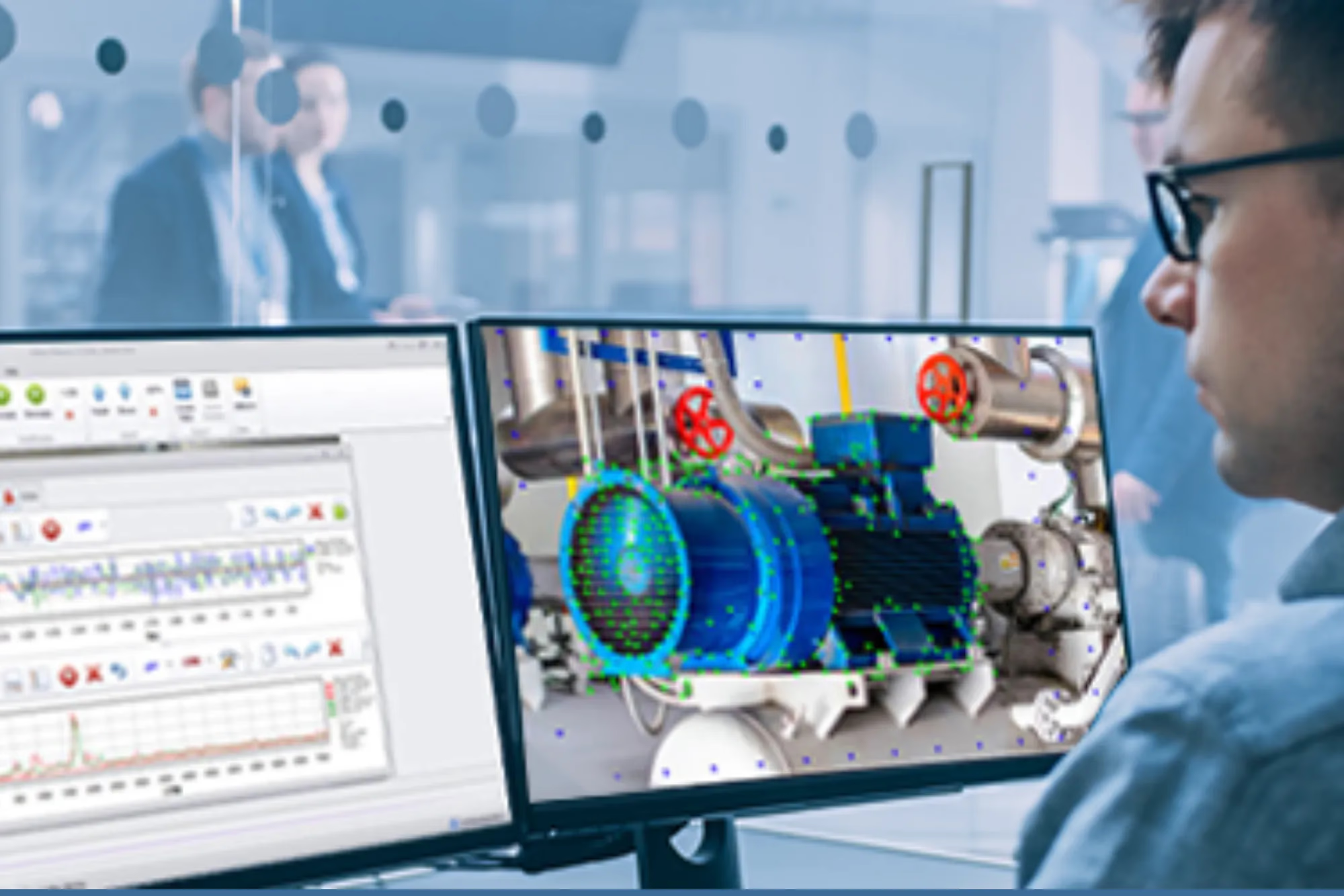
During Our On-Site Analysis, We,
Install Sensors
The latest sensors and accelerometers are mounted on the external surface of rotating machinery.
Collect Real time data
Vibration signals and patterns are recorded while the equipment runs.
Analysis
The vibration pattern is analysed to identify imbalances, misalignments, resonance issues and faults.
Machinery Diagnosis
Collected data is interpreted to diagnose machine condition and pinpoint potential faults.
Recommendations
Strategies and actionable insights are provided for corrective maintenance.
Why Machinery Vibration Analysis Matters?
- Early detection of equipment faults.
- Identification of underlying causes.
- Prioritised corrective actions.
- Extended operational equipment life.
- Condition-based intervention to avoid sudden repairs and costs.
- Minimal to no unplanned shutdown.
Our Other Services

Why Partner with our company?
- Service consultation & installation
- 24/7 monitoring
- Wireless vibration monitoring
- Non-invasive testing, no dismantling
- Real-time data and alerts
- Clear actionable reports
- Automated fault detection
- Maintenance and parts support
Frequently Asked Questions
What types of machines do you test?
+
−
We test a range of rotating and mechanical equipment like motors, turbines, compressors, fans, shafts, and rotors. Question: Will it move or rotate? We will monitor it for you.
How often should vibration analysis be performed?
+
−
The frequency depends on the equipment. For high-value, high-speed machinery, we recommend regular monitoring. For less critical machines, monthly or quarterly checks would suffice.
Do you offer remote or wireless options?
+
−
Yes, we offer both remote and wireless vibration monitoring solutions. We use the latest non-invasive and smart sensor system, which will promote real-time data access without physical inspections
How fast can I get a report?
+
−
Generally, the reports are generated within 24 to 48 hours after the data collection. For critical and sensitive components, continuous monitoring is suggested, which will deliver notifications and alerts instantly. Preliminary findings are also received instantly, based on which actions can be taken.